


Getting Started with Comic Maker [ALPHA]
On this page

Comic Maker helps you turn a story idea into a complete comic using a mix of AI Agent planning and hands-on page editing. You can use the Agent to structure your chapter, create page plans, and generate content, then review and refine individual pages before publishing.
Because Comic Maker is still in alpha, some results may vary as we continue improving page quality, character consistency, and overall reliability.
Before You Start
The recommended workflow is:
Plan → Review → Execute → Inspect → Selectively Regenerate
For most users, the best approach is a mix of Agent assistance and manual control. Let the Agent help plan the chapter, review its proposal before generating, then fix individual pages instead of rebuilding the entire chapter.
Choose Your Workflow
Fast / One-Shot:
- Refine the Agent's proposed chapter.
- Press Ship it.
- Let the Agent generate the chapter.
- Review the results.
- Regenerate individual pages that need improvement.
Controlled / Step-by-Step:
- Use the Agent for story planning, page descriptions, layouts, dialogue, and prompts.
- Review each stage before generating.
- Generate and refine pages individually.
Recommended: Start with the Agent for planning, then manually refine only the parts that need more control.
Familiarize Yourself With Lucid
Comics Maker runs on our Lucid Engine.
Before creating a larger comic, we recommend learning how Lucid handles image generation and Natural Language prompts.
Lucid: Advanced Image Generation and Editing
Lucid uses Natural Language prompting, which means you can describe characters, actions, environments, composition, lighting, and other details using normal written instructions.
Natural Language Prompting Guide for Lucid & Studio Engines
While we continue expanding Lucid's supporting features, the general testing principles in our Prompt Testing Guide are also useful. The Engine is different, but the same approach applies: start simple, test first, and refine based on the result.
Prompt Testing Guide: How to Avoid Wasting Gems on Unsupported Prompts
How to Access Comics Maker

You can access Comics Maker in several ways:
- Browse published comics from the Home page.
- Select Create AI Porn and choose Comics Maker to start a new comic.
- Open the User Menu and select Studio to access or manage your existing projects.
Create a New Comic
Add a Title and Description
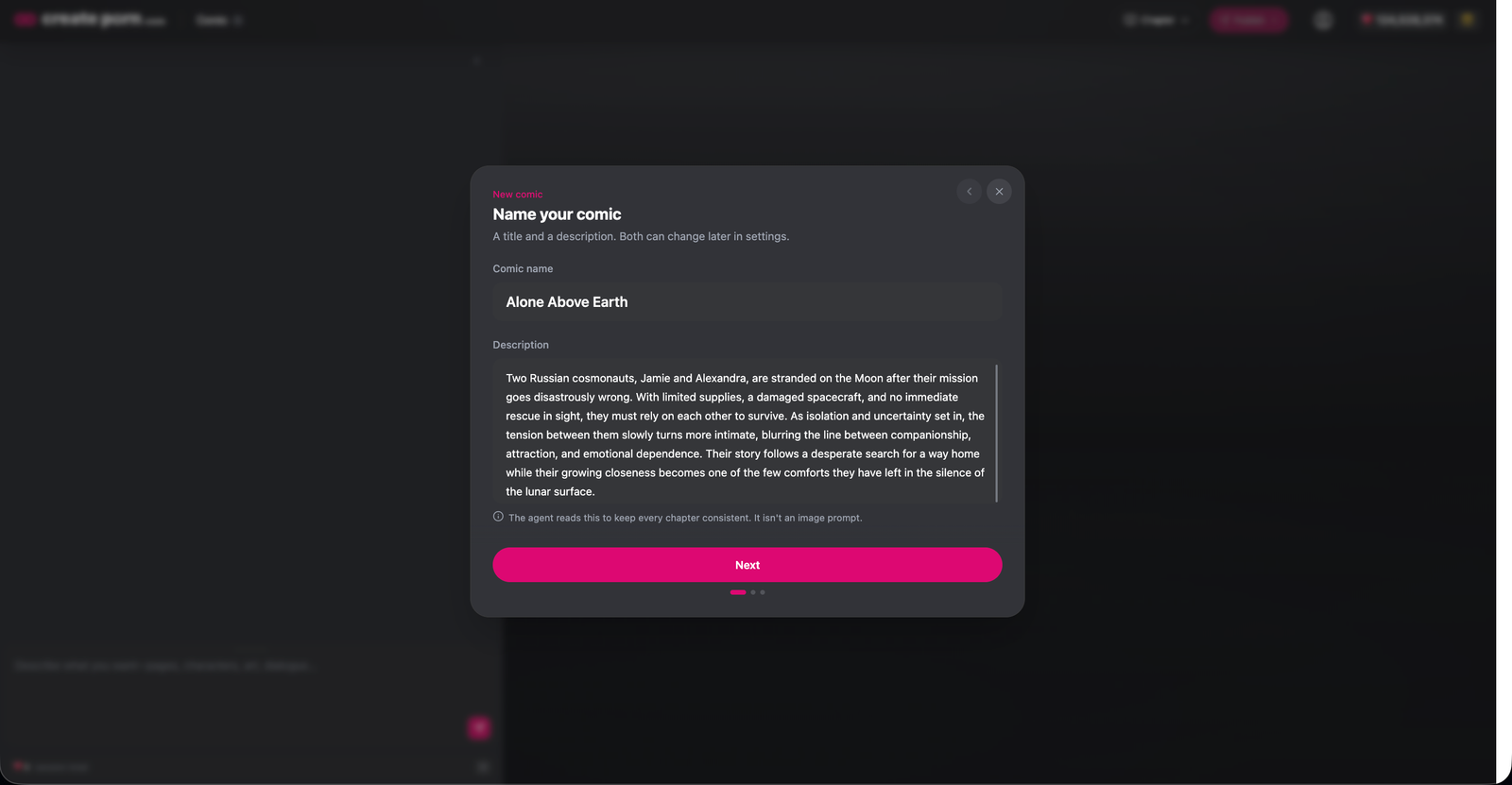
Enter your Comic Name and Description.
The Description is your story synopsis. The Agent reads this to understand the overall story and help keep future chapters consistent.
Note: The Description is not an image prompt.
Try to include the main characters, setting, conflict, and overall direction of the story.
Select Genres
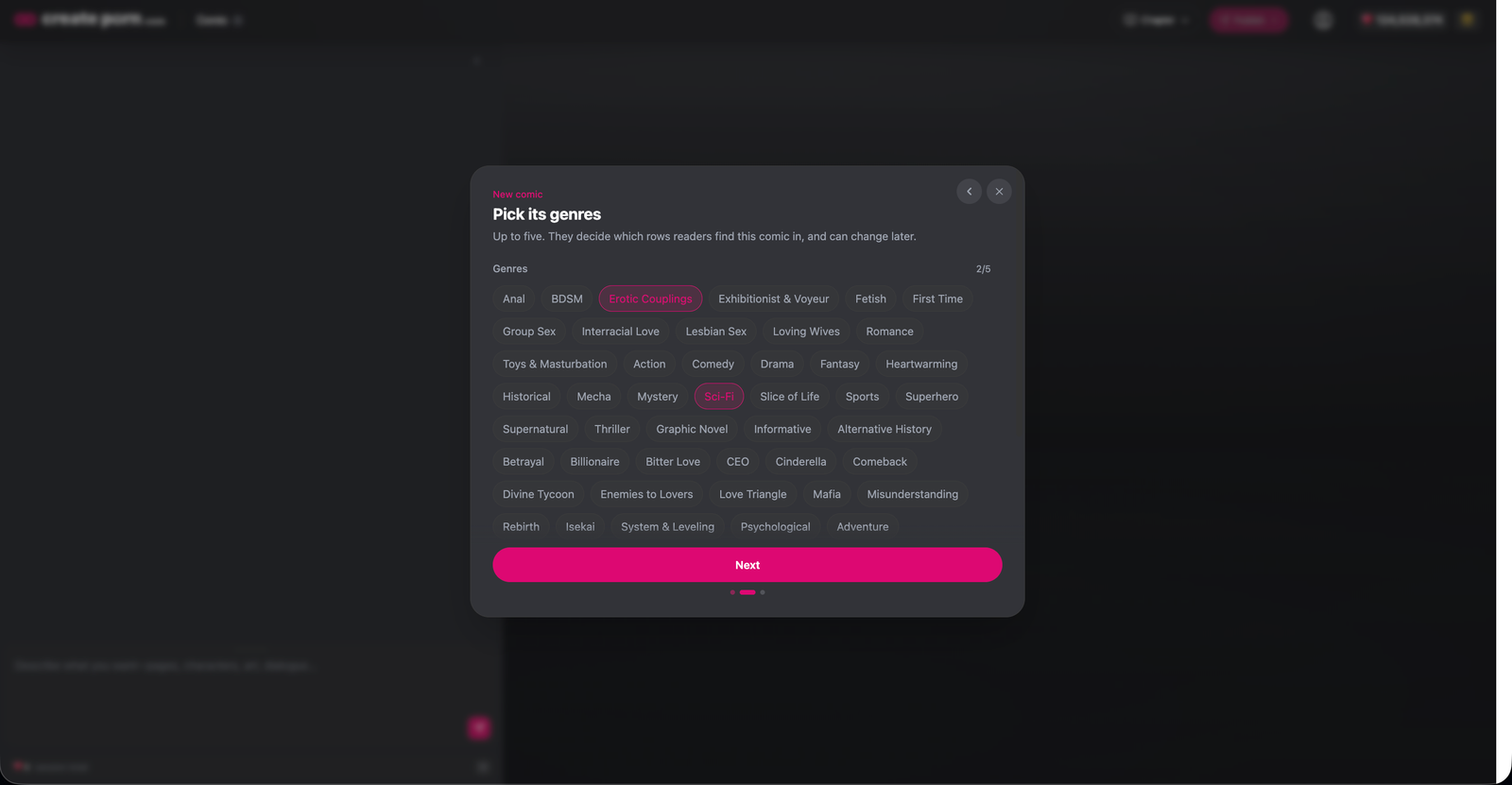
Choose the Genres that best describe your comic.
Genres help other users find your comic when browsing published content.
You can change them later if needed.
Select an Art Style

Choose the visual Style for your comic.
Only Styles supported by Lucid are available.
Note: The selected Style controls the look of the comic and cannot currently be changed after the comic is created.
When ready, press Start Creating.
Let the Agent Prepare Your Chapter Plan
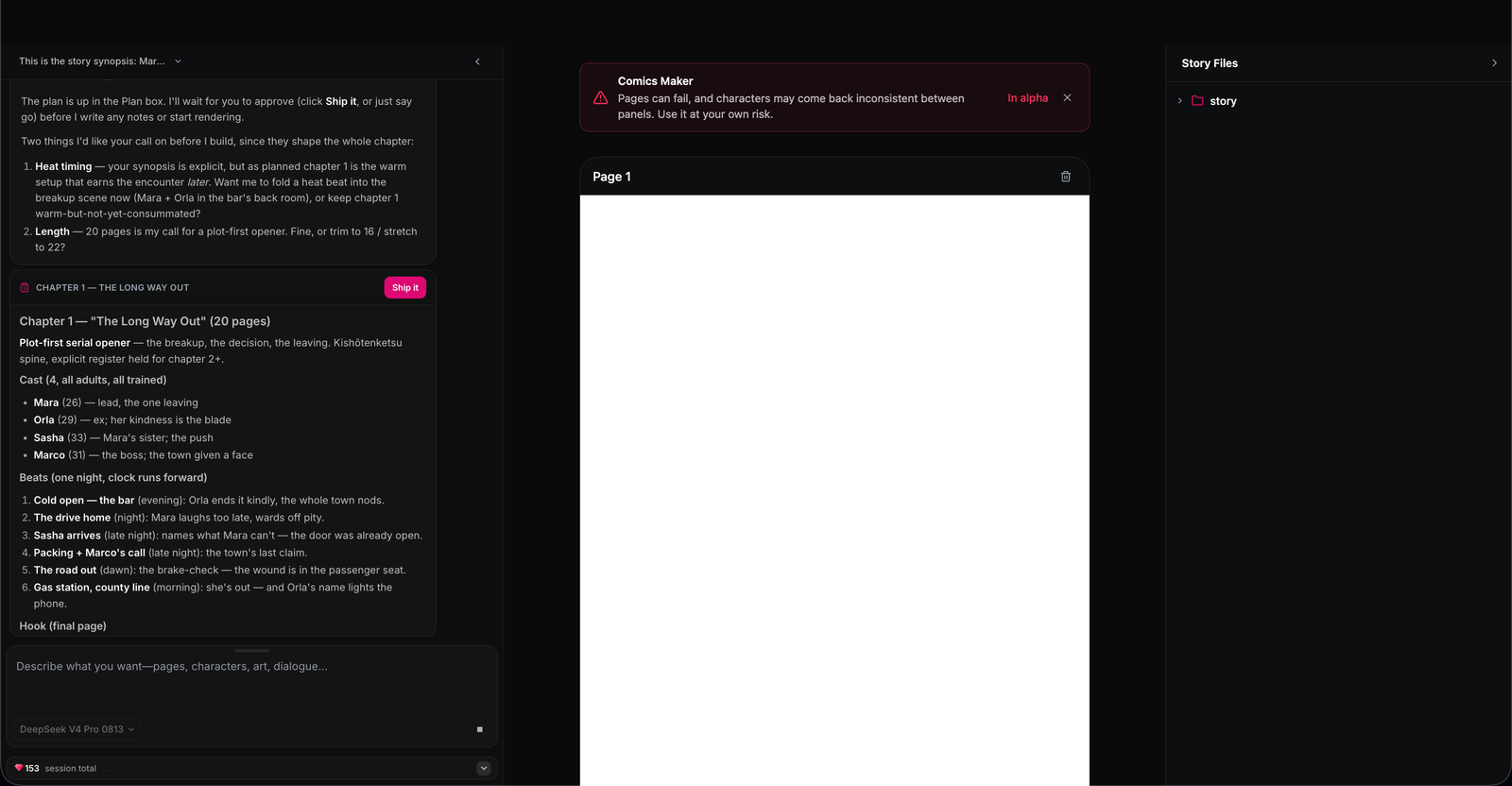
The Agent reads your story description and prepares a proposed chapter plan before generation begins.
The Agent may plan:
- Characters
- Page count
- Story beats
- Major scenes
- Dialogue
- Character relationships
- Pacing
- Chapter ending
Read the proposal carefully before approving it.
Talking to the Agent costs Gems, so review its existing response before sending additional instructions.
Review and Refine the Plan
Comics Maker is still in alpha, and the Agent may occasionally misunderstand your story or make suggestions you do not want.
Continue talking to the Agent until you are happy with the plan.
You can ask the Agent to:
- Change the page count.
- Add or remove scenes.
- Rewrite dialogue.
- Adjust pacing.
- Change a Character's role.
- Change the tone of a scene.
- Rewrite a page prompt.
- Show the page plan before generating.
Planning changes are usually easier to make before the chapter has been generated.
Start Generating
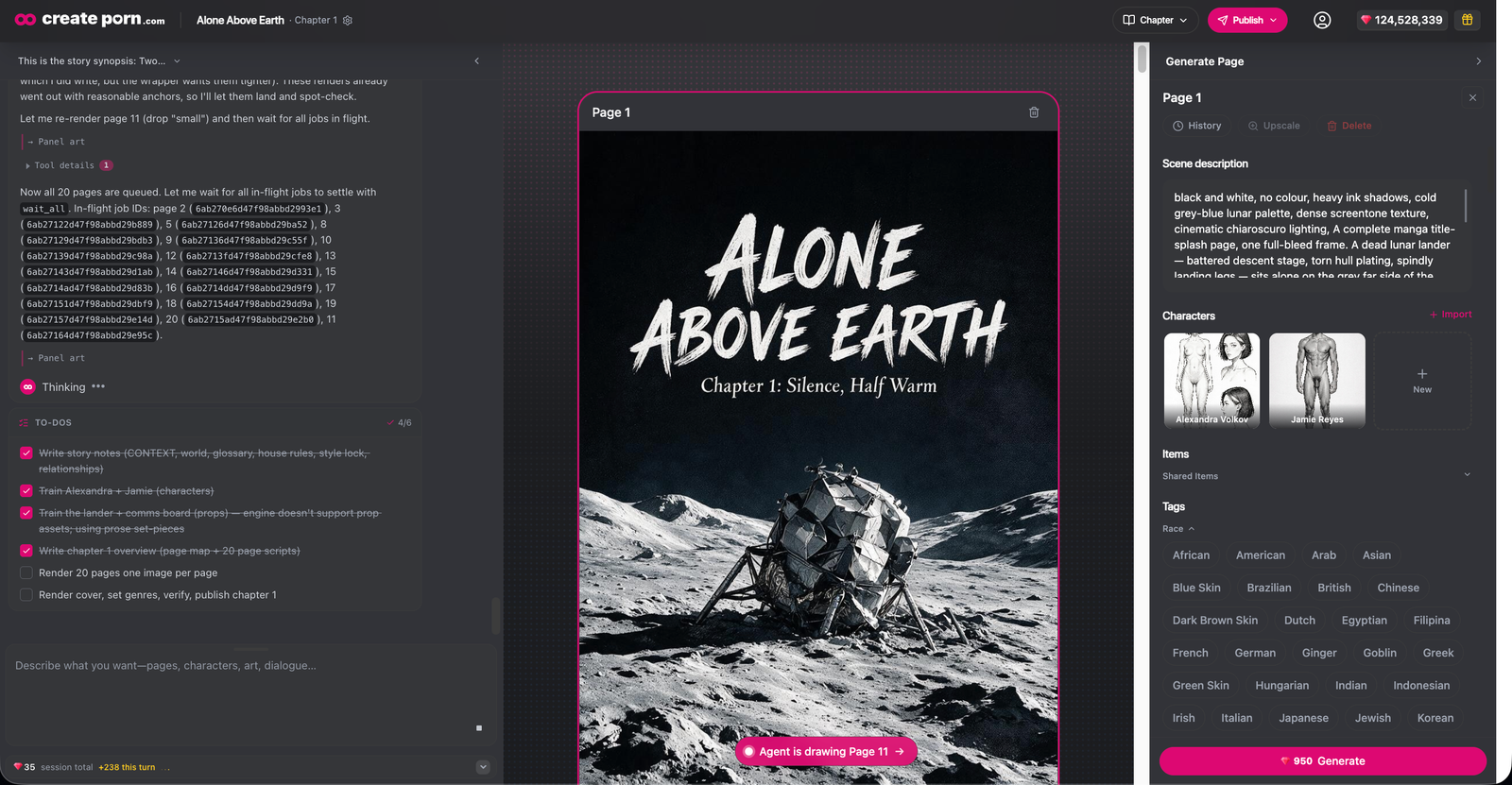
Ensure you review the Agent's proposal before proceeding with any generations. Before going ahead with anything, choose what workflow you prefer.
Generate the Full Chapter
This is the faster option.
- Create your story.
- Review the Agent's plan.
- Refine anything that needs changing.
- Press Ship it.
- Let the Agent generate the chapter.
- Review the finished pages.
- Regenerate individual pages that need improvement.
Work Page by Page
Use this approach when you want more control.
Ask the Agent to help prepare the story, page description, dialogue, layout, or generation prompt without immediately generating the entire chapter.
Review the information first, then generate and refine pages & panels individually later.
Approve Changes and Proceed
Once you are happy with the proposed plan, press Ship it.
Ship it means you approve the current plan and want the Agent to begin generating the chapter.
The Agent will start creating the pages based on the approved plan.
Review the plan carefully before pressing it, especially when generating a larger chapter.
Stop the Agent
If the Agent starts doing something you did not intend, press the Stop button in the bottom-right corner of the chat box.
Use Stop when:
- The Agent misunderstood your request.
- Generation started before you were ready.
- You notice a problem with the plan.
- You want to change your instructions.
You can then review what happened and give the Agent new instructions.
Working With Characters and References
Characters can change slightly between generated pages, so check important characters throughout the chapter.
For better consistency:
- Establish important Characters early.
- Reuse the same Characters and References.
- Keep important appearance details consistent.
- Review each generated page for unwanted changes.
Pay particular attention to the face, hair, clothing, body appearance, and accessories.
If one page has a consistency problem, regenerate that page instead of rebuilding the whole chapter.
Note: Support for more References will be added shortly.
Edit and Regenerate an Individual Page
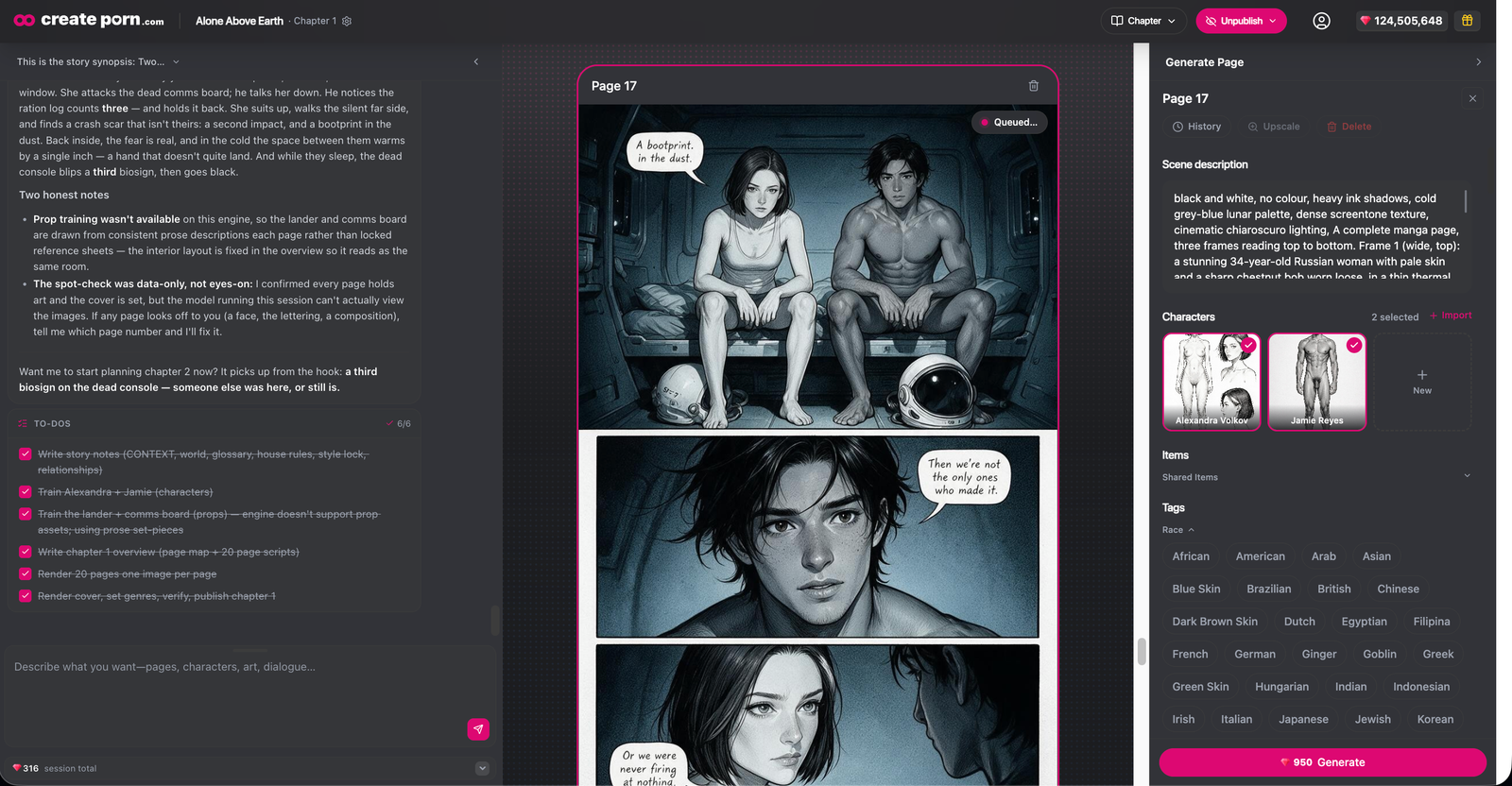
You do not need to regenerate the entire chapter when one page needs changing.
- Select the page in the Comic Editor.
- Review the page settings.
- Change the information you want to improve.
- Regenerate the page.
Depending on the page, you may be able to adjust:
- Scene description
- Characters
- References
- Items
- Tags
- Other generation settings
This is currently the best way to refine a chapter after the first generation.
Note: Support for single-page Editing will be introduced in the immediate future.
Add More Detail When Regenerating Individual Pages
When generating or regenerating your comic page by page, include enough detail for Lucid to understand what should stay consistent between generations.
Note: Comic Maker is still in alpha, so some visual consistency may vary between pages. This will improve quickly as we continue refining the feature and its supporting consistency tools.
Include important recurring details such as:
- Character appearance, including hair, face, body type, clothing, and accessories.
- Location and background appearance.
- Important props or Items.
- Lighting and color tone.
- Character positioning and relationships.
- Any details that should remain consistent with previous pages.
Example:
Alexandra has shoulder-length black hair, pale skin, blue eyes, and wears a fitted white cosmonaut undersuit. Jamie has messy dark hair, brown eyes, and wears a grey thermal shirt. They are inside the same cramped lunar lander with scratched metal walls, exposed wiring, dim blue instrument lighting, and a circular window overlooking the Moon.
The Agent will use these details and optimize the generation prompt with its built-in Prompt Enhancer before sending it to Lucid.
Tip: Focus on details that matter for continuity. You do not need to make every prompt long if those details are not important to the page.
Use the Agent Efficiently
The Agent is most useful for larger planning and creative tasks.
Good uses for the Agent:
- Story development
- Storyboards
- Chapter planning
- Page counts
- Page and panel layouts
- Dialogue
- Camera direction
- Scene descriptions
- Generation prompts
- Story continuity
For smaller changes, manual editing may be faster.
Consider editing manually when you only need to:
- Rewrite one prompt.
- Change one Tag.
- Replace one Character.
- Adjust one page.
- Regenerate one image.
Suggestion from Developers: Prompt writing bots are planned. Until that can be introduced, enter your prompt into an LLM that supports NSFW outputs to refine it before editing the image.
Review Prompts Before Generating
If you want more control, ask the Agent to show you the generation prompt before it creates the page.
Check the prompt for:
- Characters
- Actions
- Environment
- Composition
- Camera angle
- Clothing
- Dialogue
- References
- Style
You can edit the prompt yourself before generating.
You can also use another chatbot to review or refine the prompt before spending Gems.
How to Save Gems
To reduce unnecessary Gem use:
- Start with a simple story.
- Plan the chapter before generating.
- Read the Agent's proposal carefully.
- Avoid unnecessary Agent messages.
- Review prompts before generation.
- Use manual controls for small changes.
- Regenerate individual pages instead of rebuilding the chapter.
- Press Stop if the Agent begins an unwanted process.
Review Your Comic
Before publishing, review the complete chapter.
Check for:
- Character consistency
- Page order
- Story continuity
- Dialogue
- Scene composition
- Character placement
- Missing or unwanted Characters
- Page quality
- Whether each page matches the intended story
If one page does not work, fix that page before changing the rest of the chapter.
Publish and Share
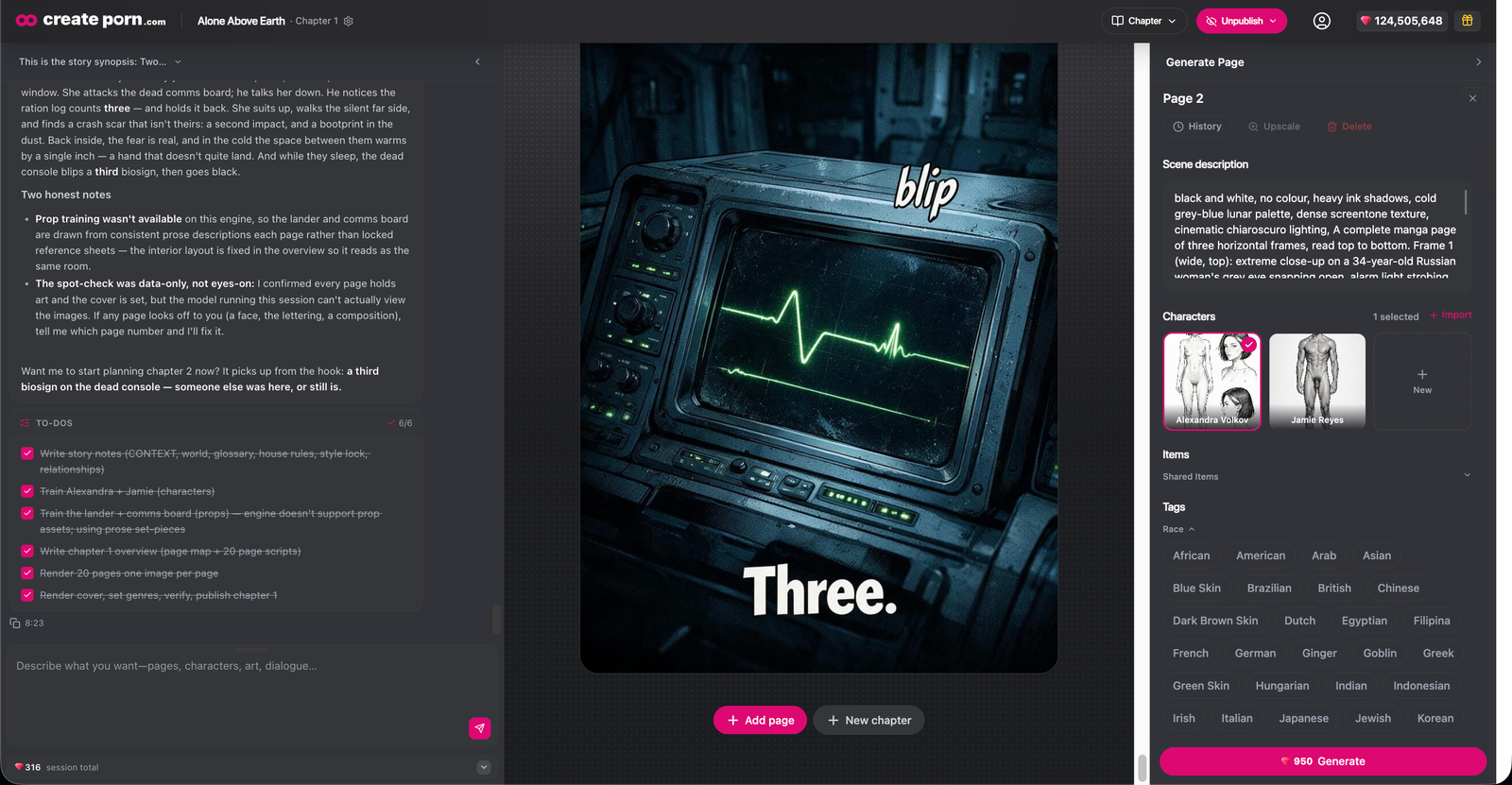
When your comic is ready:
- Review the final pages.
- Regenerate anything that still needs improvement.
- Press Publish.
- Share your comic with the community.
Published comics can be discovered by other users from the Home page and through the Genres you selected.
Tips
For better results:
- Read what the Agent says before approving anything.
- Start with a simple chapter.
- Use the Agent mainly for planning and larger creative tasks.
- Review prompts before generating.
- Use manual editing for smaller fixes.
- Check every generated page.
- Regenerate individual pages whenever possible.
- Keep important Characters and References consistent.
- Use Stop if the Agent begins doing something you did not intend.
Need Help?
If something does not work as expected, try fixing the affected part before rebuilding the project.
Common issues:
- The Agent misunderstood the story: Simplify or clarify your instructions.
- The chapter plan is wrong: Refine it before pressing Ship it.
- The Agent is performing an unwanted action: Press Stop.
- One page is incorrect: Select the page in the Comic Editor and regenerate it.
- A Character looks different: Review the selected Character or Reference and regenerate the affected page.
- Several pages are failing: Simplify the chapter or generate fewer elements at once.
If the issue continues or the project cannot proceed, contact Support.